
Commercial Deck Builders in Austin, TX
Titan Deck Company Austin builds commercial decks across the Austin metro: restaurant and hospitality patios, hotel and pool decks, multi-family common areas, and office and retail spaces. We build to commercial code, coordinate permitting and inspection, and schedule the work around a business that has to keep running.
Request A Quote
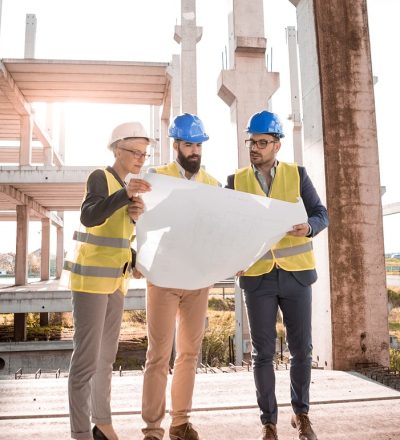
Commercial Decking Is a Different Job
A commercial deck isn’t a residential deck built bigger. It carries heavier and more constant foot traffic, it answers to commercial building code rather than residential, and it often has to meet accessibility requirements a backyard deck never sees. It also gets built around a business that can’t shut down for the duration, so the schedule and site management matter as much as the construction. When you’re planning a project, start your commercial project and we’ll walk the property and scope it against your operation, not just the square footage.
We work with restaurants and hospitality groups, hotels, multi-family and property-management companies, and office and retail properties across the Austin metro. Each has its own priorities, and the sections below cover how we approach them.
What We Build for Commercial Properties
Restaurant and hospitality.
Outdoor dining, rooftop seating, and patio expansions. These are high-traffic, high-visibility spaces where durability and appearance both matter, and where the build usually has to happen without closing the venue. We phase the work and coordinate around service hours where we can.
Hotel and recreational.
Pool decks, courtyard spaces, and amenity areas for hotels, fitness centers, and rec facilities. Pool-adjacent commercial decks pull in slip-resistance and drainage requirements on top of the structural work, the same detailing we bring to a commercial pool deck.
Multi-family and property management.
Shared decks, walkways, and common areas for apartment complexes, condos, and townhome communities. These projects run heavily on code compliance, occupancy load, and often fire-rating requirements, and they’re usually coordinated with a property manager or HOA rather than a single owner.
Office and retail.
Employee break areas, outdoor meeting spaces, and customer-facing seating. Smaller in scope than a multi-family build, but the same commercial-code and accessibility standards apply.

Code, Accessibility, and Permitting at Commercial Scale
This is where commercial work diverges most from residential, and where experience matters. We build to the applicable commercial building code, not the residential code, and we coordinate the permitting and inspection process for the jurisdiction the property sits in.
Commercial building code. Occupancy load, guardrail and stair requirements, and structural load ratings are stricter for commercial than residential decks, since the deck may hold far more people at once. We size framing and connections to the commercial loads the space is rated for, and we build to the local code as confirmed with the City of Austin or the relevant authority.
Accessibility. Many commercial decks have to be accessible, which pulls in ramp slopes, landing dimensions, surface transitions, and railing details that residential decks don’t. We account for accessibility requirements in the design where they apply and confirm the specifics with the authority having jurisdiction.
Permitting and inspection. Commercial permitting is more involved than residential, and it often requires stamped structural drawings. We coordinate the permit and inspection process through our permit partners and provide the documentation the jurisdiction requires. For a project that starts from an architectural concept, that runs through our custom design and drawings.
Building Around an Operating Business
The construction challenge on a commercial deck is usually scheduling, not the deck itself. A restaurant can’t close for three weeks, an apartment complex can’t fence off its only courtyard through the summer, and a hotel can’t route guests through a construction zone. So we plan the build around the operation.
That means phased construction where the space has to stay partly open, work scheduled around business hours or off-season windows where it helps, clear site containment and daily cleanup, and coordination with your facilities or property-management team throughout. We treat the schedule as part of the scope, and we set it during planning rather than discovering it mid-project.
For material, most commercial decks use commercial-grade composite for its low maintenance and traffic durability, though hardwood and pressure-treated framing have their place depending on the look and budget. We walk through the trade-offs against your traffic, exposure, and maintenance capacity during planning.
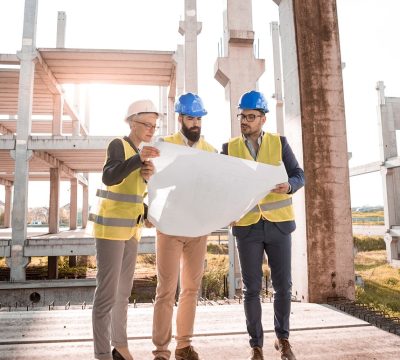
How a Commercial Project Works
Step 1, consultation and site assessment.
We walk the property, discuss the use and the constraints, and scope the project against your operation and the applicable code. This produces a verbal scope range and a plan for phasing.
Step 2, design and material selection.
We develop the layout, structural approach, and material specification, with renderings where the project warrants them. Accessibility and code requirements are built into the design at this stage.
Step 3, permitting and drawings.
We coordinate commercial permitting through our permit partners, including stamped structural drawings where the jurisdiction requires them.
Step 4, phased construction.
Commercial-grade framing and surface installation, built to the commercial loads and code for the space, sequenced around your operation with site containment and daily cleanup.
Step 5, inspection and handover.
Final structural inspection, code sign-off with the jurisdiction, and a handover package including the maintenance schedule for the material installed, plus our 1 yr craftsmanship warranty on the construction.
Where We Build Commercial Decks
We build commercial decks across the Austin metro, from Central and Downtown Austin out through the surrounding cities. Restaurant, hotel, multi-family, and office projects all sit within our standard coverage.
We work with commercial properties in West Lake Hills commercial projects and Bee Cave commercial projects, and across greater Austin, Round Rock, Cedar Park, and Georgetown.
For a commercial property that needs repairs to an existing commercial deck rather than a new build, we handle that through our repair service. Reach out and we’ll tell you honestly whether the project fits our crew and schedule.
Frequently Asked Questions
How long does a commercial deck take to build?
It depends on size, complexity, and how much the work has to be phased around your operation. A straightforward restaurant patio can be a couple of weeks; a large multi-family common area phased around occupancy can run considerably longer. We give you a project-specific timeline during planning, with the phasing built in.
What materials do you use for commercial decks?
Most commercial projects use composite for its low maintenance and traffic durability, but hardwood and pressure-treated framing have their place depending on the look, budget, and exposure. We match the material to your traffic, maintenance capacity, and appearance goals during planning.
Do you handle commercial permitting?
Yes. We coordinate the commercial permit and inspection process through our permit partners, including stamped structural drawings where the jurisdiction requires them. Commercial permitting is more involved than residential, and we manage it as part of the project.
Can you build around our business staying open?
Yes, and this is usually the central planning challenge. We phase construction so the space can stay partly open where possible, schedule around business hours or off-season windows, and maintain site containment and daily cleanup. The schedule is set during planning, not improvised mid-project.
Do you work with property managers and HOAs?
Yes. Multi-family and community projects are usually coordinated with a property manager, HOA, or facilities team rather than a single owner, and we work within that structure for approvals, scheduling, and communication throughout the project.
Do commercial decks need to be accessible?
Many do. Accessibility requirements pull in ramp slopes, landings, surface transitions, and railing details that residential decks don’t carry. We account for them in the design where they apply and confirm the specifics with the authority having jurisdiction for your property.
Schedule a Commercial Consultation
Tell us about the property and the project. Initial site visits are free and produce a verbal scope range, a phasing plan, and an honest read on whether the project fits our crew and schedule. We respond within one business day. Our Austin commercial team works across the whole metro.
Or call (512) 650-2760